
Experiments are carried out not only in physics, chemistry or biology, but also in mathematics!
Experimental Mathematics Lab
Projects under my supervision were offered through:
- 2024 – present:
Course "Mathe am Computer" and seminar "Experimentelle Mathematik", Universität Paderborn (15 projects in total) - 2018 – 2024:
Experimental Mathematics Lab, University of Luxembourg (13 projects in total)
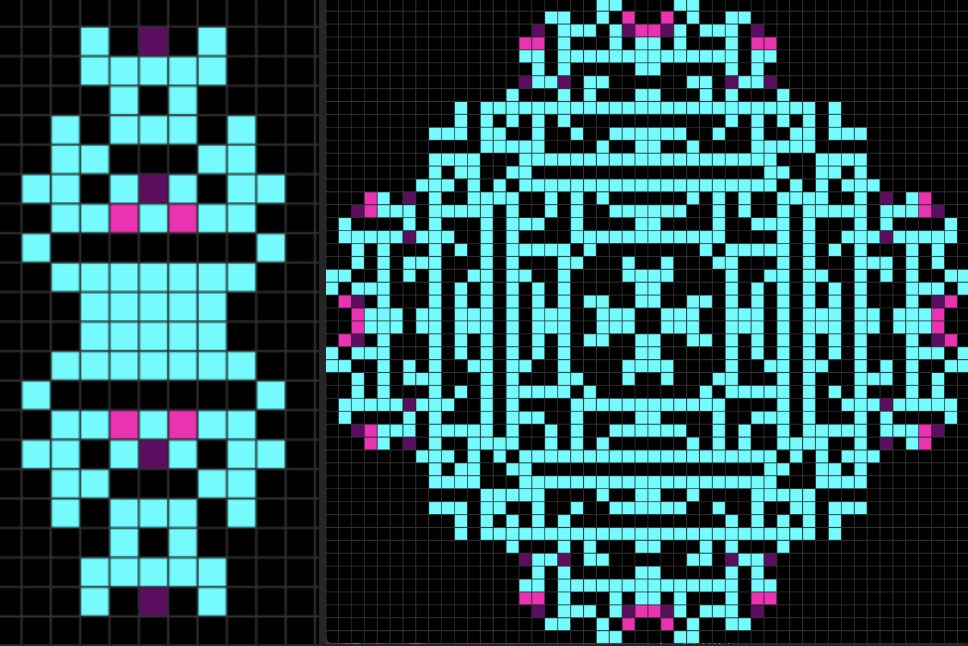
Conway’s Game of Life
- 2026, "Game over? Conways Spiel des Lebens oder des Todes" (
Mathe am Computer, Universität Paderborn ) - 2026, "Conways Spiel des Lebens" (
Seminar Experimentelle Mathematik, Universität Paderborn )
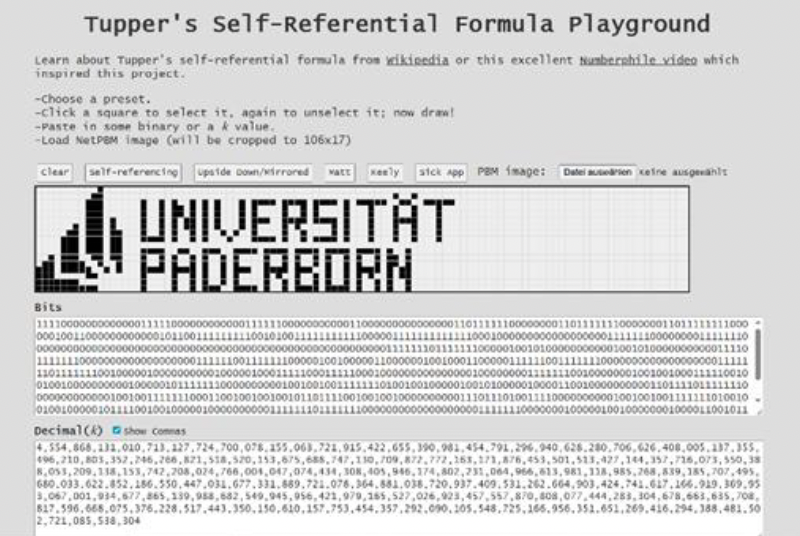
Drawing with Tupper's formula
- 2026, "Bilder mit Tuppers Formel zeichnen" (
Mathe am Computer, Universität Paderborn )
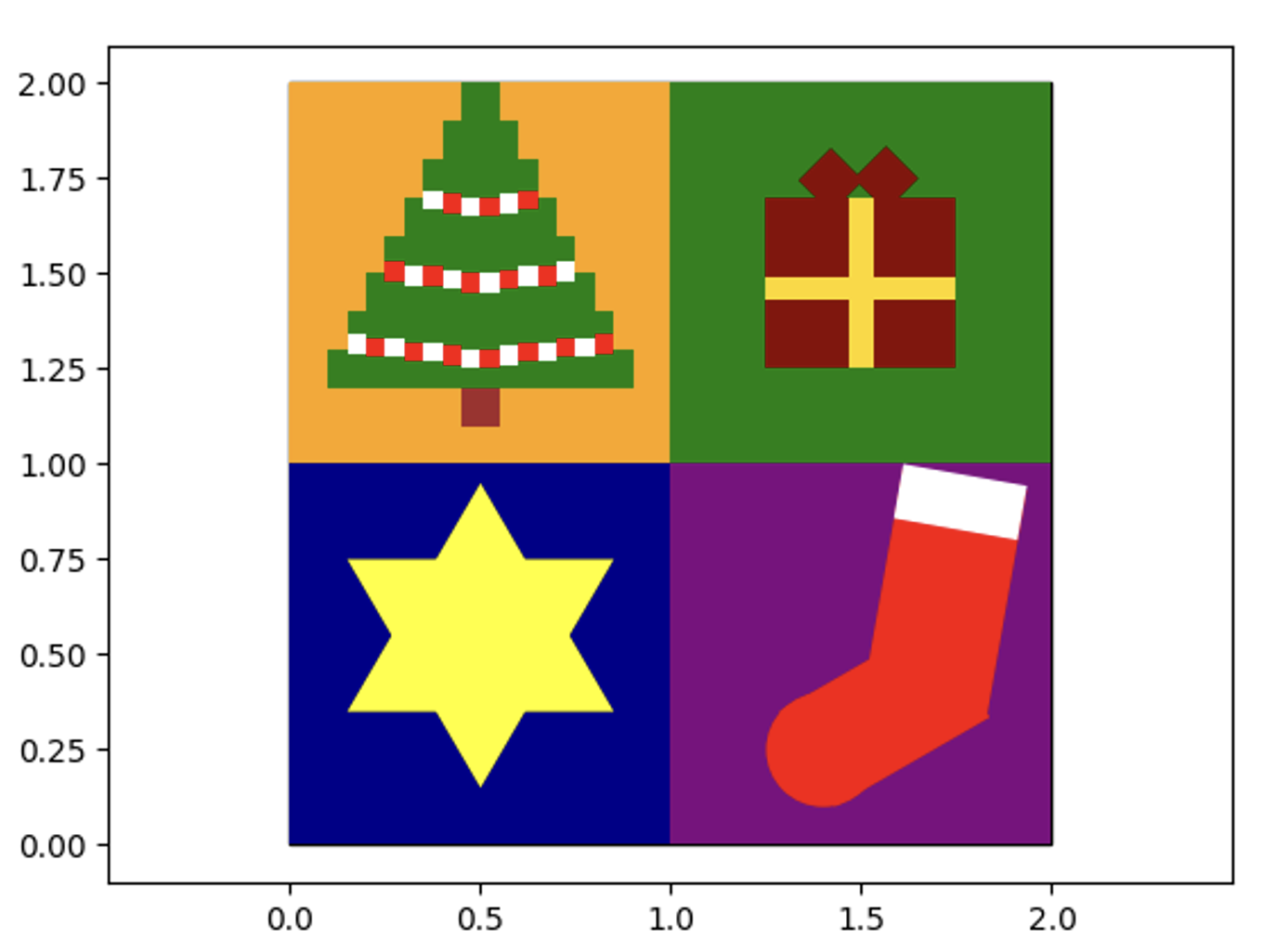
Nested rectangles
- 2026, "(Unendliche) Teilung eines Rechtecks in neue Rechtecke" (
Mathe am Computer, Universität Paderborn )
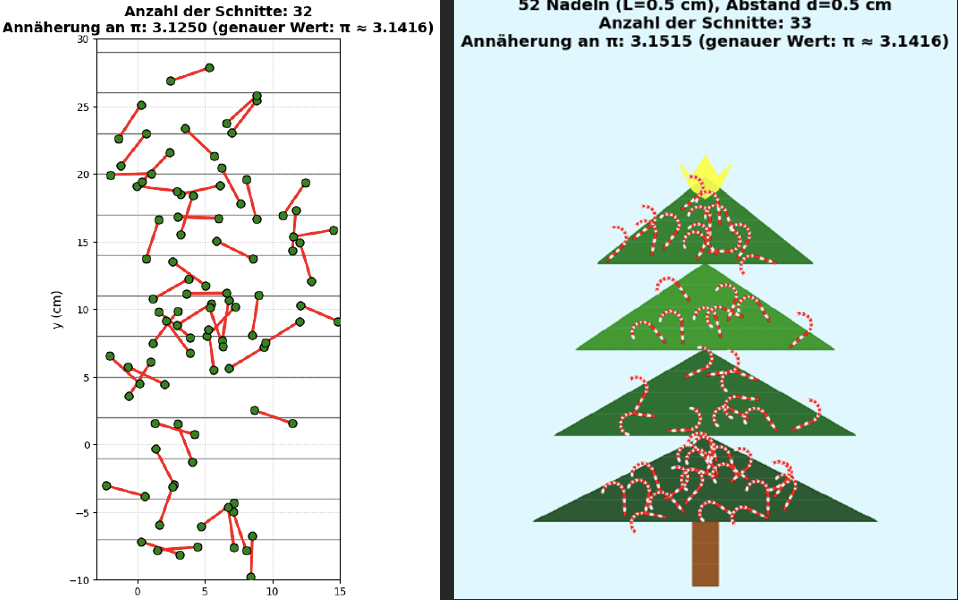
Chasing $\pi$ with needles
- 2026, "$\pi$-Annäherung durch das Buffonsche Nadelproblem" (
Mathe am Computer, Universität Paderborn ) - 2026, "Buffonsche Nadelproblem" (
Seminar Experimentelle Mathematik, Universität Paderborn )
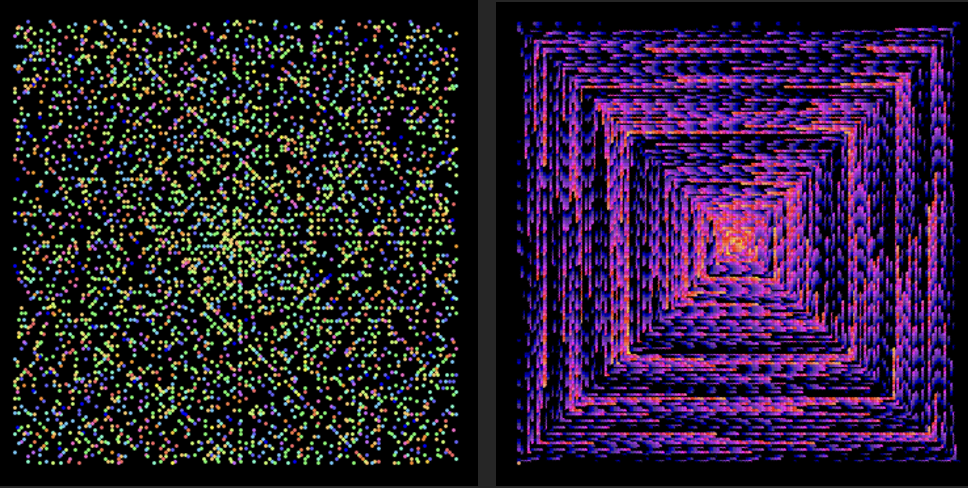
When numbers take shape
- 2026, "Grafische Darstellung von Primzahlen - Die Ulam Spirale und darüber hinaus" (
Mathe am Computer, Universität Paderborn )

Colorful fractional Gaussian integers
- 2025, Colorful fractional Gaussian integers (
EML, University of Luxembourg, in collaboration with Anne Fisch ) - 2026, "Arithmetische Schneeflocken" (
Mathe am Computer, Universität Paderborn )

Mathematical puzzles
- 2025, "Die Mathematik hinter Wordle-Raten" (
Mathe am Computer, Universität Paderborn ) - 2025, "Wie besiege ich Mastermind?" (
Mathe am Computer, Universität Paderborn ) - 2025, "Sudoku mal anders!" (
Mathe am Computer, Universität Paderborn )
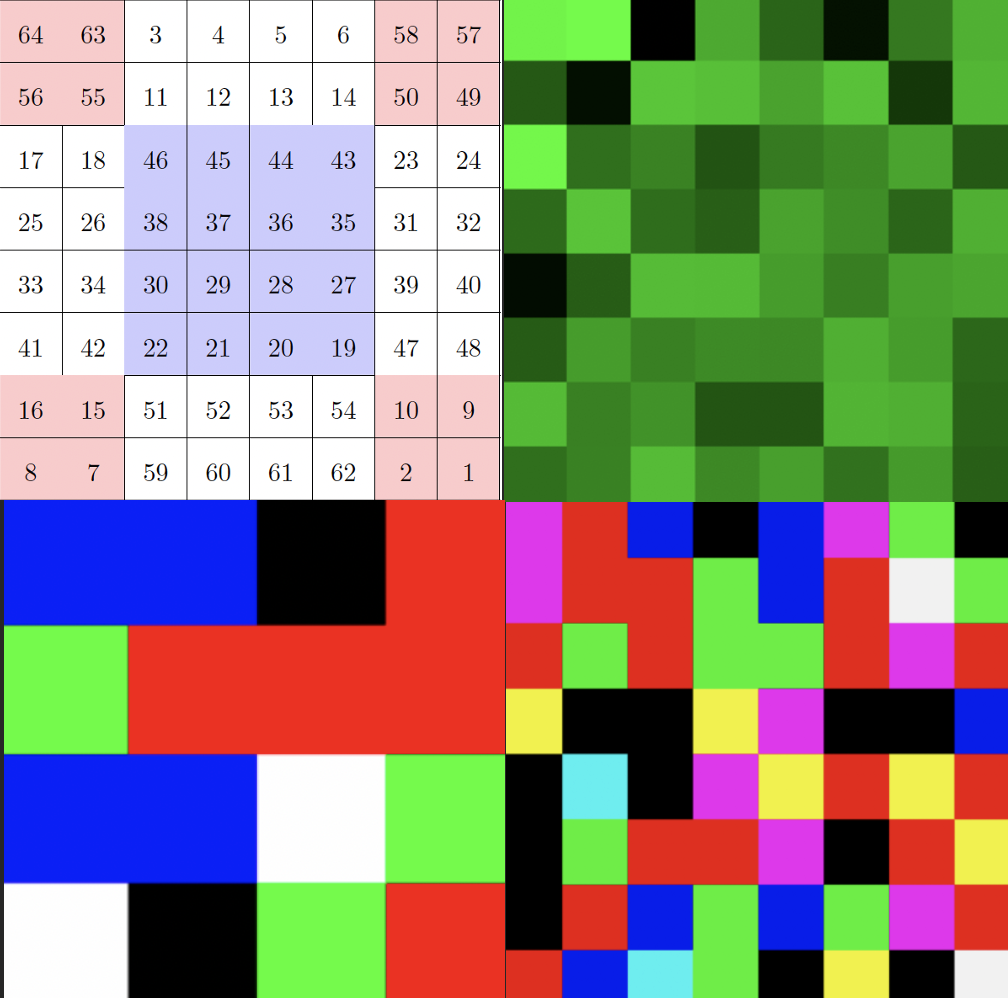
Visualising systems of linear equations
- 2024, Visualising systems of linear equations (
EML, University of Luxembourg, in collaboration with Gabor Wiese ) - 2025, "Einfärbung eines magischen linearen Gleichungssystems" (
Mathe am Computer, Universität Paderborn )
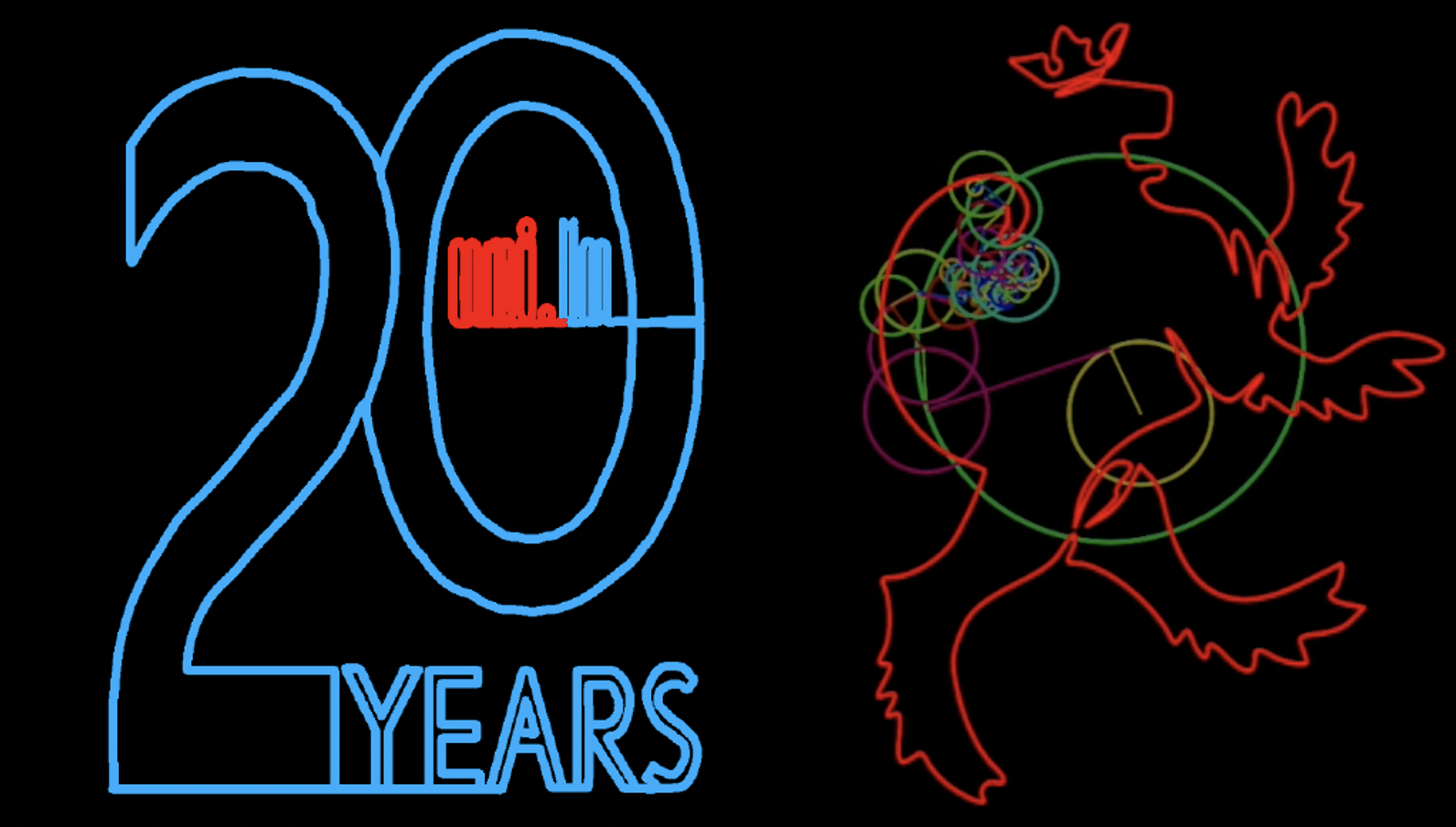
Drawing with Fourier series
- 2023, Celebrating the 20th anniversary of our university with Fourier series (
EML, University of Luxembourg )
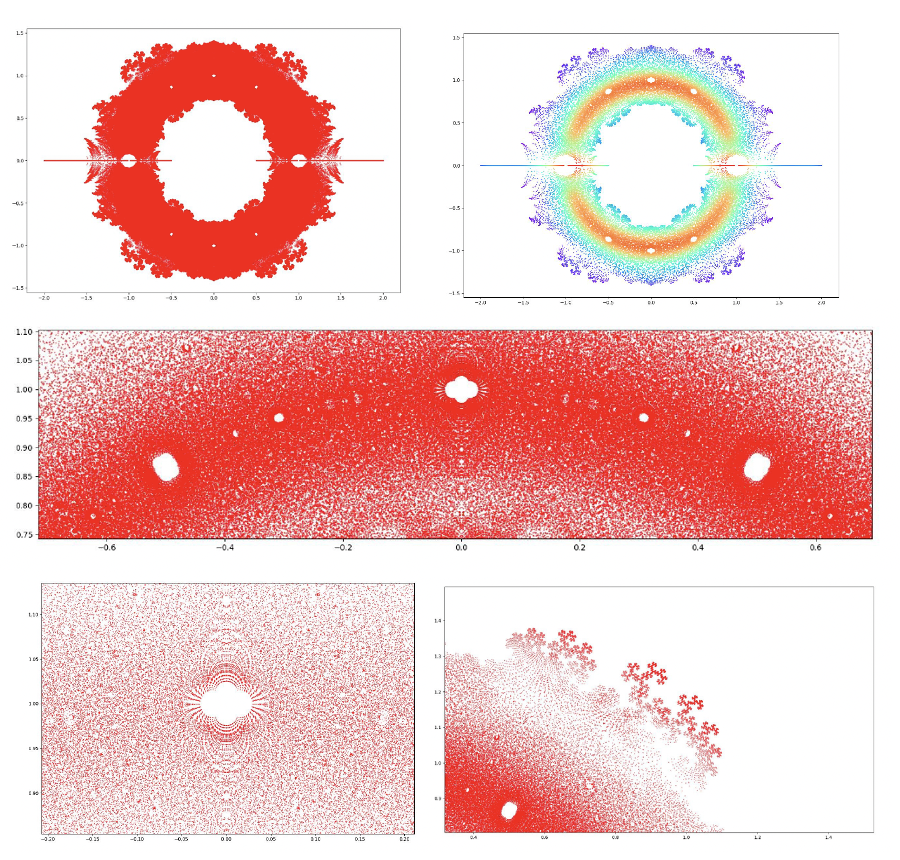
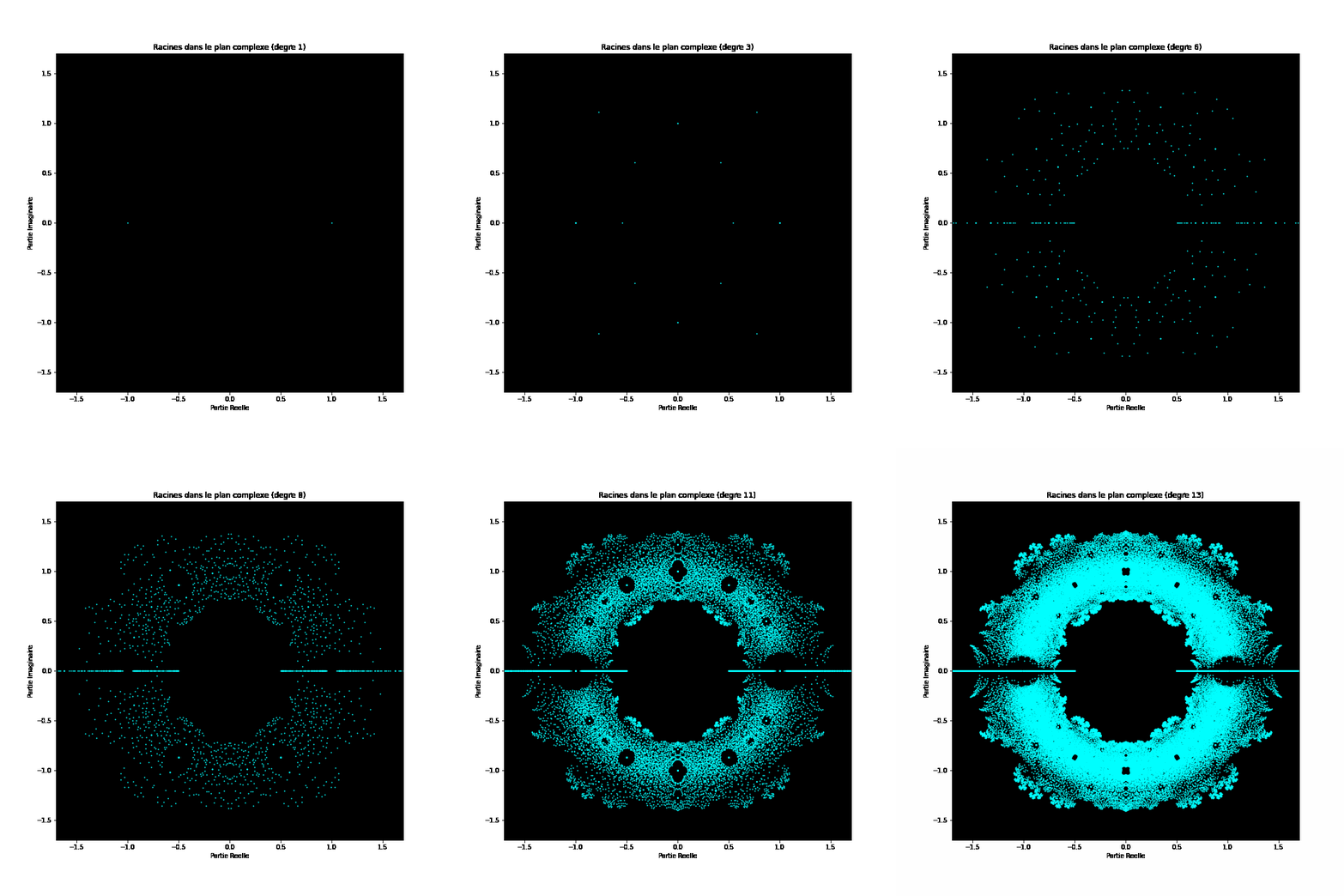
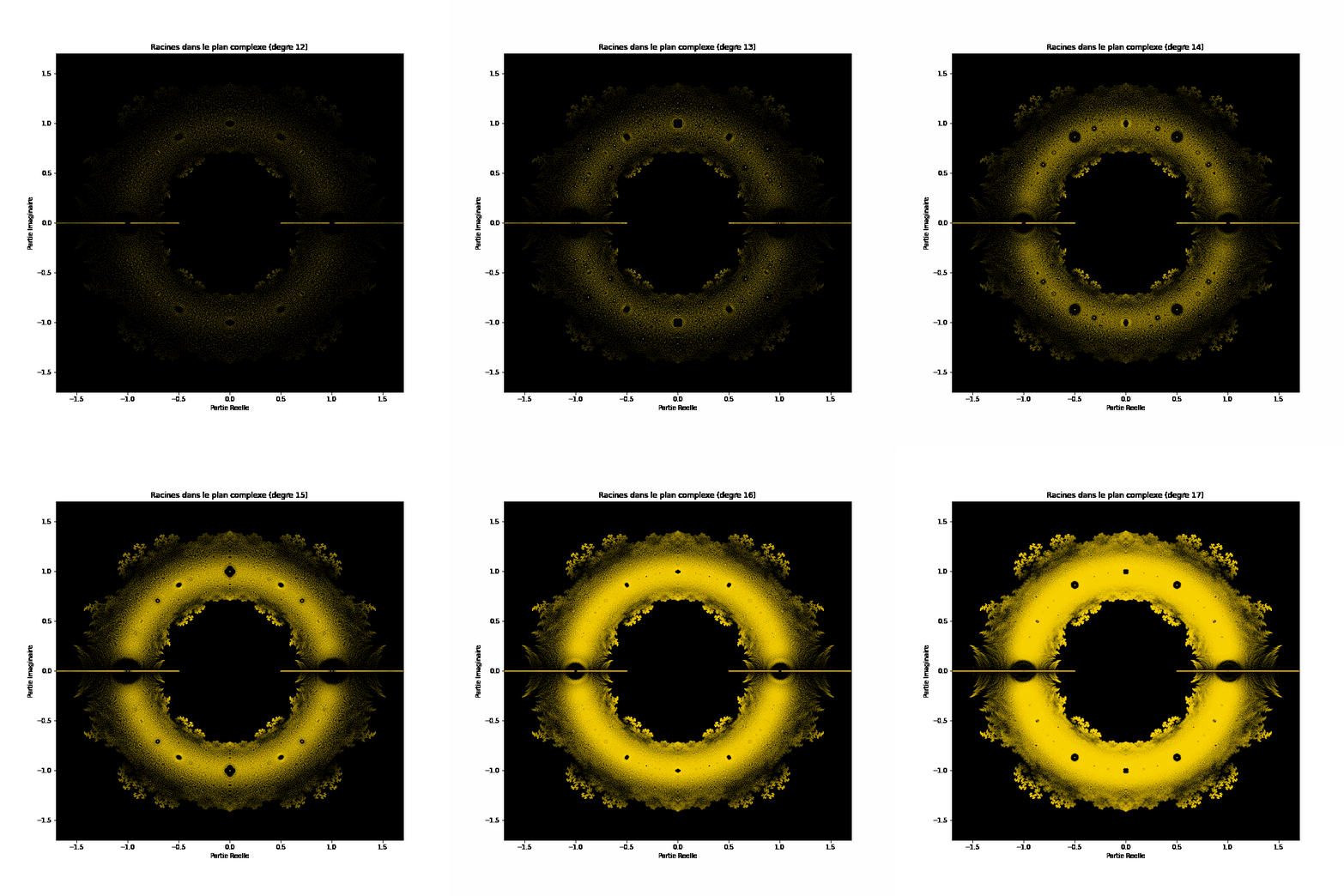
Visualising roots of algebraic numbers
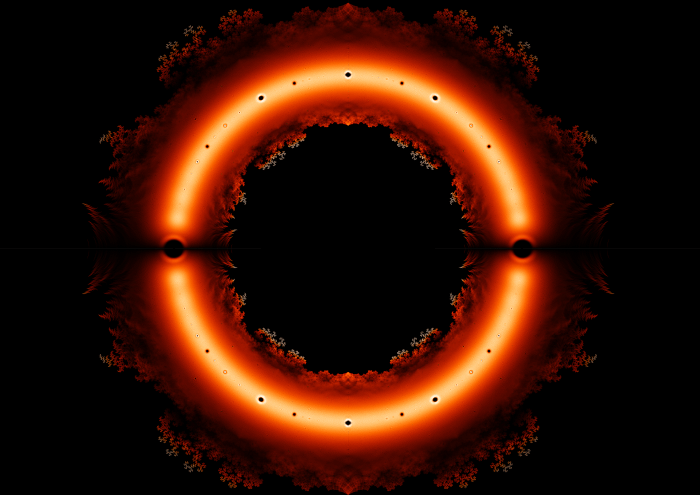
- 2023, Visualising roots of algebraic numbers II (
EML, University of Luxembourg, in collaboration with Gabor Wiese ) - 2023, Visualising roots of algebraic numbers I (
EML, University of Luxembourg, in collaboration with Gabor Wiese )
Box counting
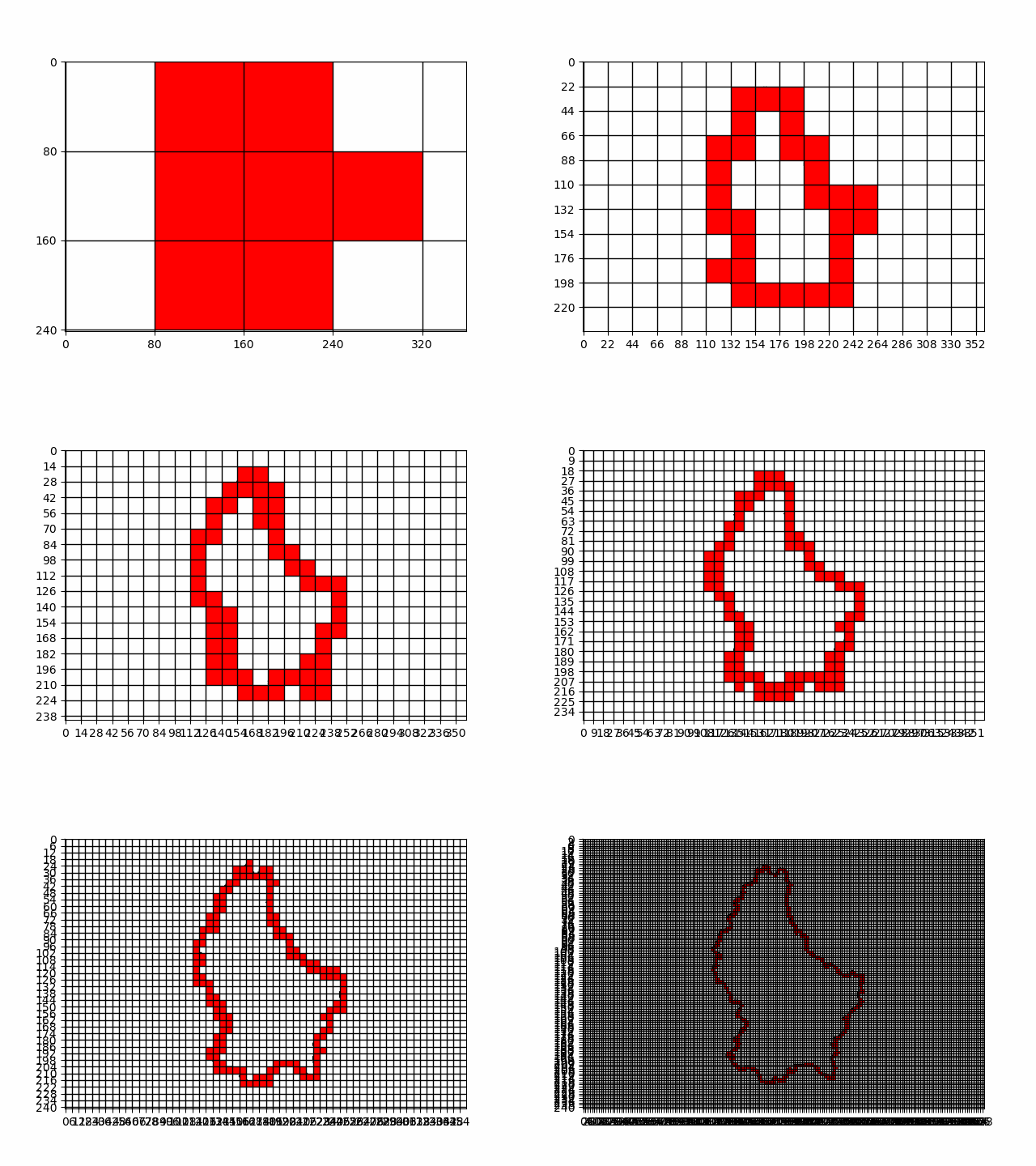
- 2021, Lët'z box counting! (
EML, University of Luxembourg, in collaboration with Lara Daw )
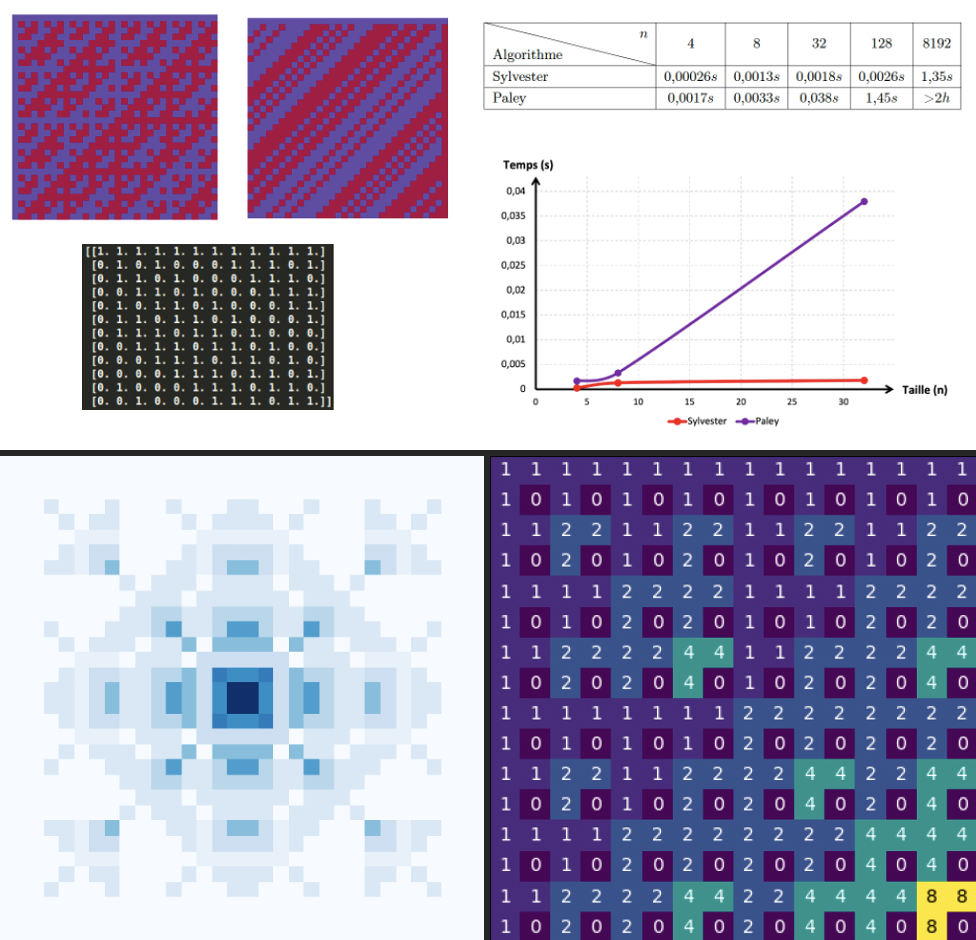
Playing with Hadmard matrices
- 2021, Behind the secrets of Hadamard matrices and their applications (
EML, University of Luxembourg ) - 2026, "Faszinierende Muster in der Hadamard-Matrix" (
Mathe am Computer, Universität Paderborn )
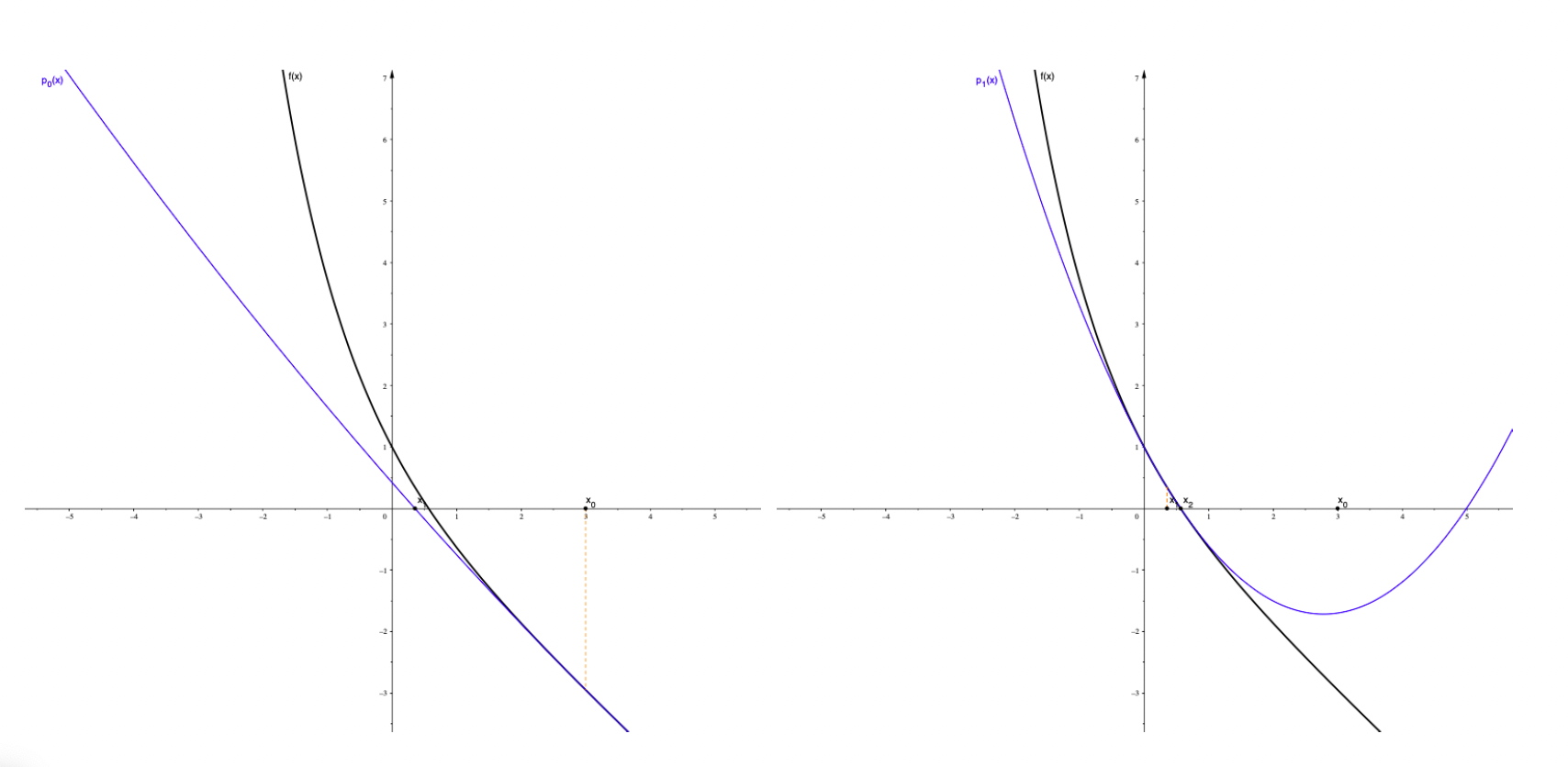
Solving polynomial equations over finite fields
- 2020, Solving polynomial equations (
EML, University of Luxembourg, in collaboration with Gabor Wiese )
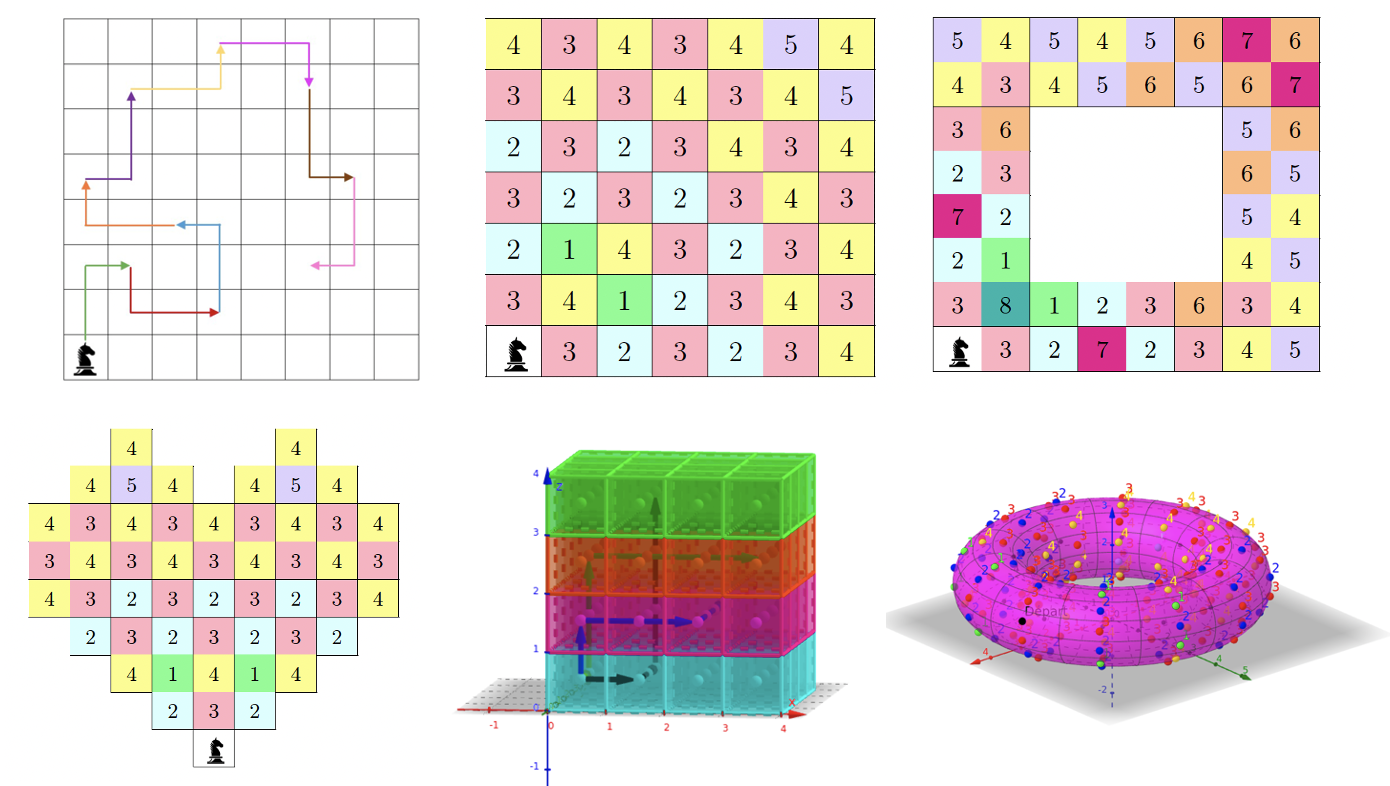
Playing with knights (and queens)
- 2020, Knights (and queens) (
EML, University of Luxembourg, in collaboration with Gabor Wiese )
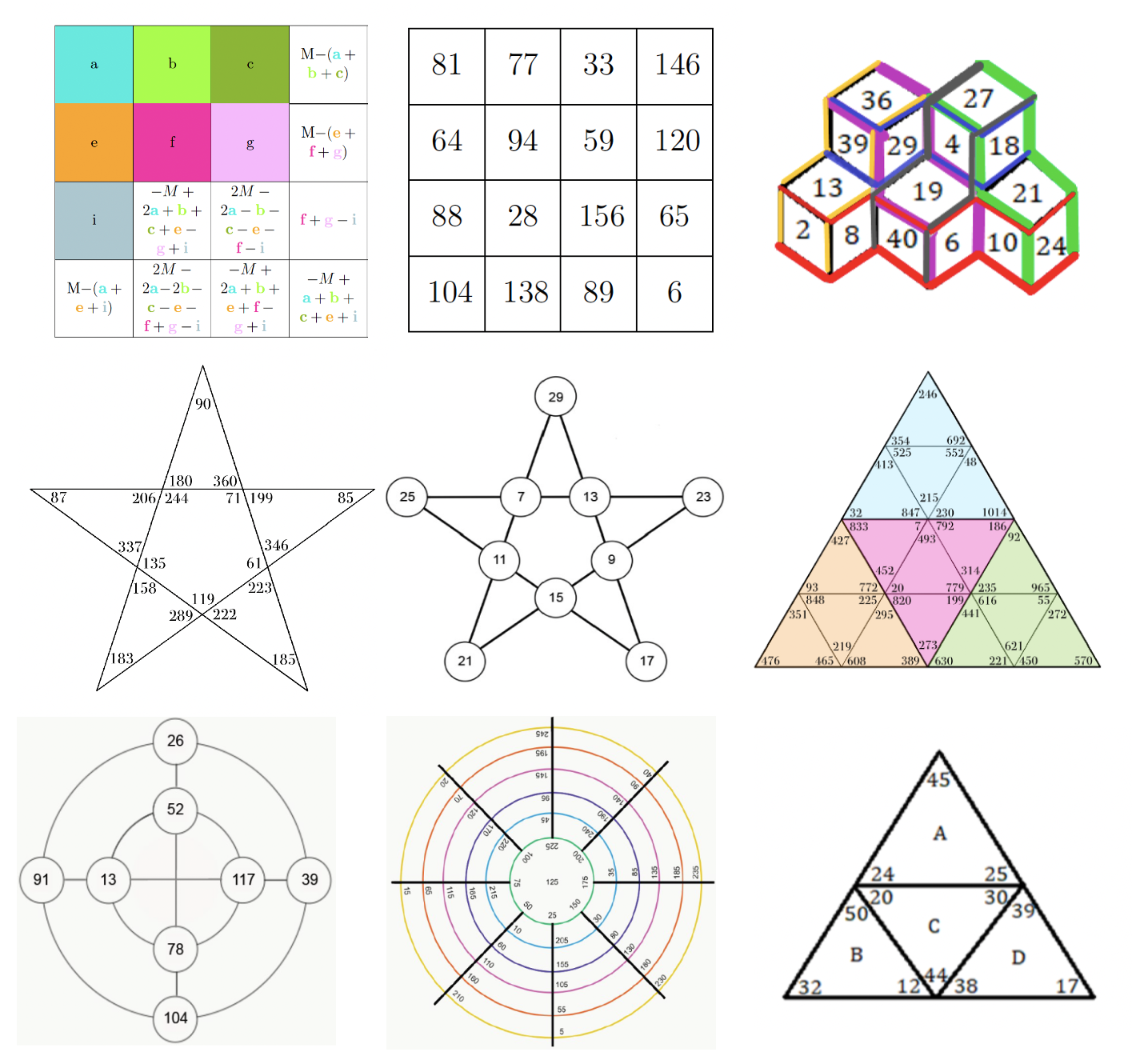
Magic objects of squares
- 2019, Magic squares of squares (
EML, University of Luxembourg, in collaboration with Gabor Wiese ) - 2020, Magic objects of squares in modular arithmetic (
EML, University of Luxembourg, in collaboration with Gabor Wiese ) - 2020, Magic objects over the integers (
EML, University of Luxembourg, in collaboration with Gabor Wiese ) - 2025, "Magische Objekte in der Ebene" (
Mathe am Computer, Universität Paderborn ) - 2025, "Magische Objekte aus Quadratzahlen: Modularer Ansatz" (
Mathe am Computer, Universität Paderborn ) - 2025, "Magische Körper" (
Mathe am Computer, Universität Paderborn ) - 2026, "Magische Objekte" (
Mathe am Computer, Universität Paderborn )
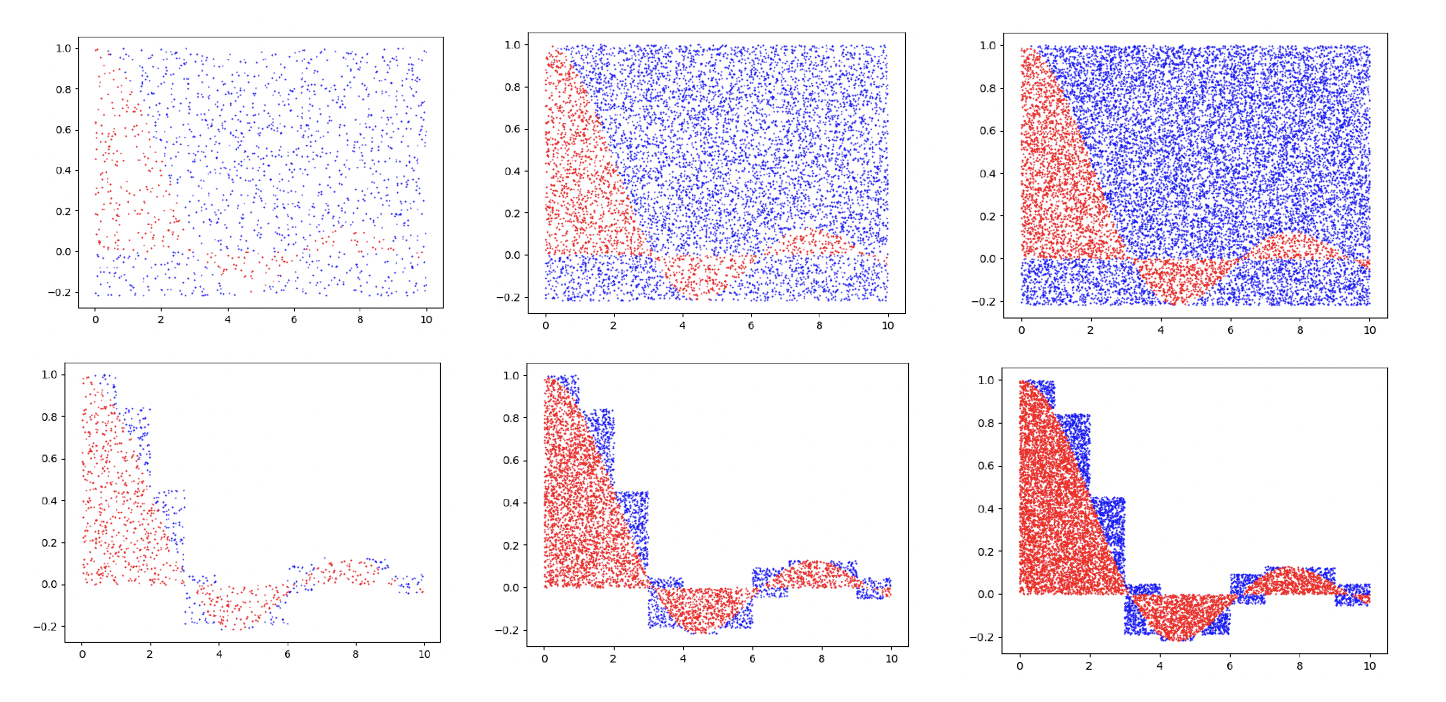
Approximating integrals thanks to Monte-Carlo
- 2018, Monte Carlo simulation (
EML, University of Luxembourg )
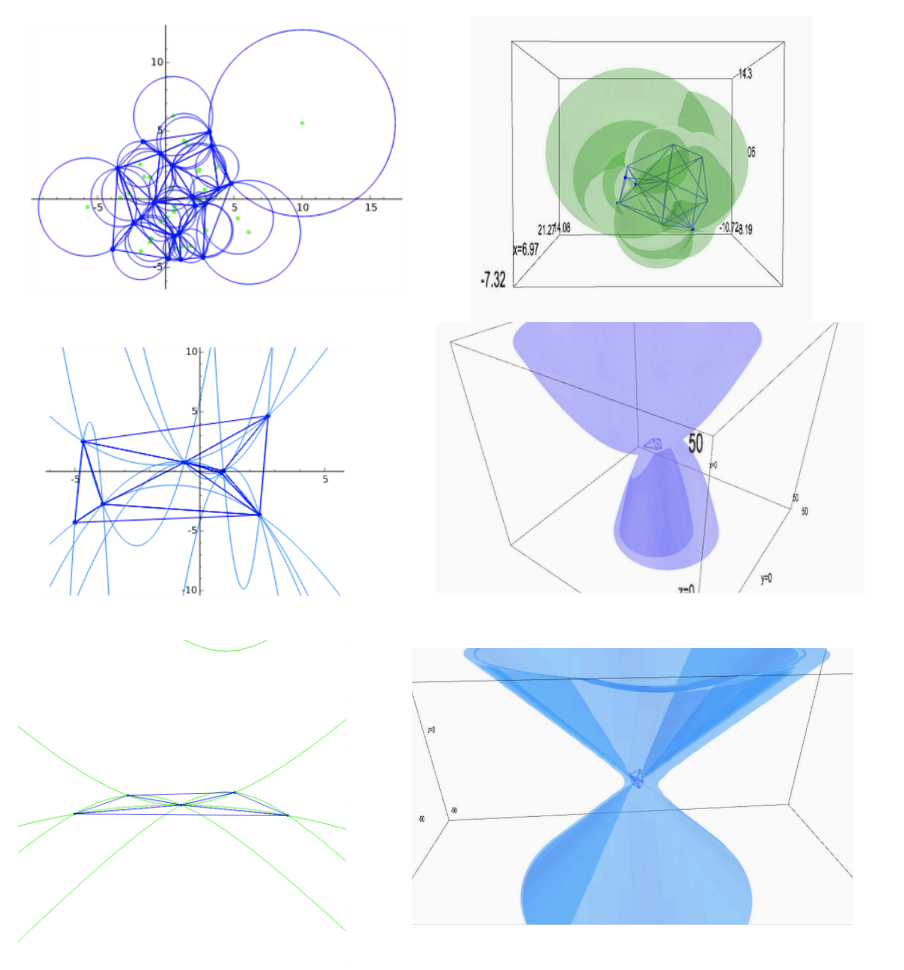
Exotic Delauny decomposition**
- 2018, Triangulation de Delaunay, student: Guenda Palmirotta (
EML, University of Luxembourg )